
All Brands
Washer Repair Near You — All Brands
Fast, reliable local Washer repair — certified neighborhood technicians, all brands, same-day available.
Mon–Sat 7am–8pm · Sun 9am–5pm
Schedule Your Repair
Service Type
What type of service do you need?
Or call us directly:
(973) 718-9373Brands We Service













Built for New Jersey — Homes, Condos & More
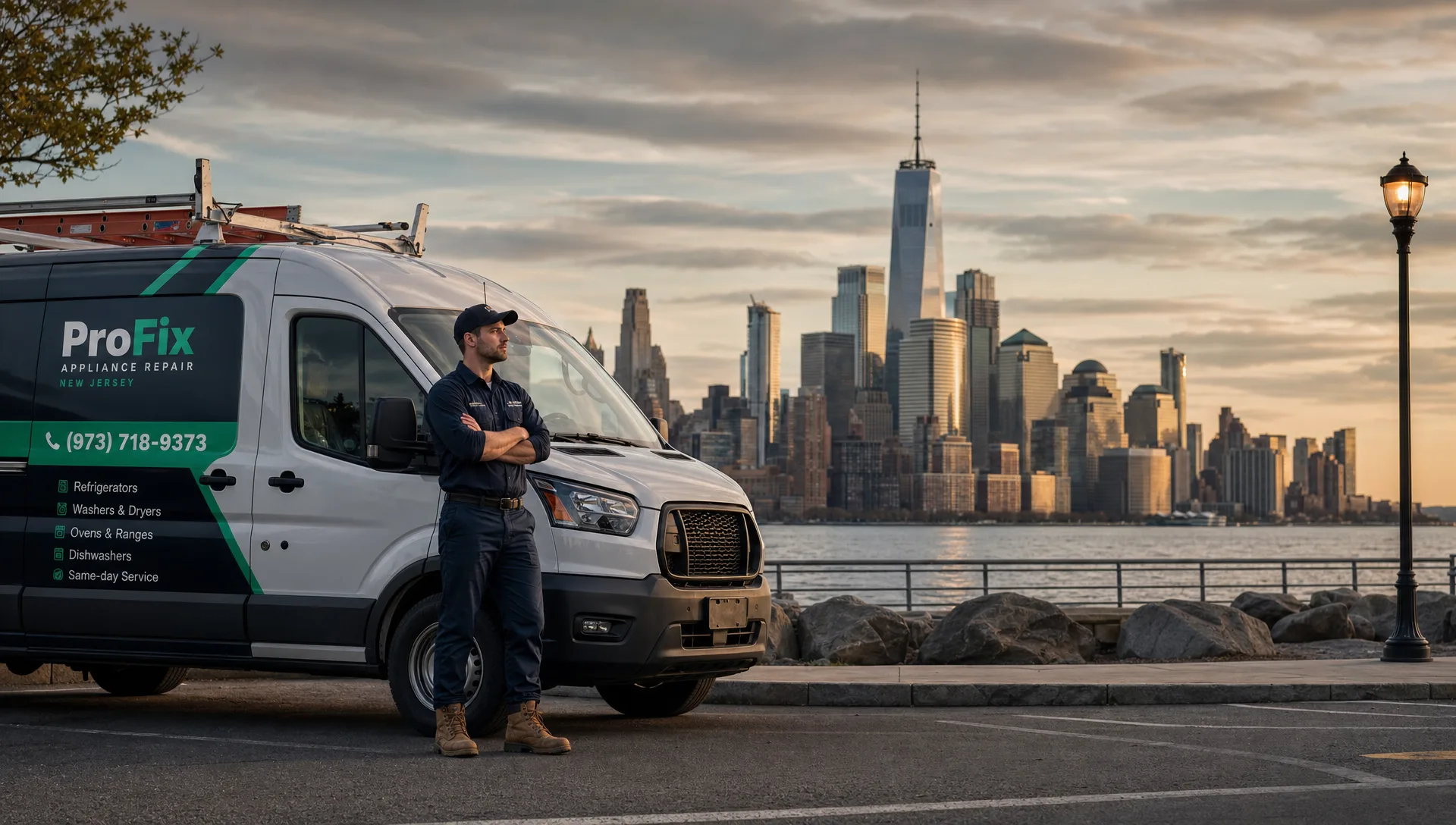
ProFix Appliance Repair New Jersey offers local Washer repair near you. Our certified neighborhood technicians diagnose and fix any Washer problem, from simple issues to complex repairs. We service Samsung, LG, Whirlpool, GE, Maytag, Bosch, KitchenAid, Frigidaire, Sub-Zero, and all other manufacturers. Book your Washer repair today for same-day service.
How It Works
Available Now · New Jersey
Ready to schedule your repair?
ProFix Appliance Repair New Jersey — trusted by thousands of NJ homeowners. Same-day slots available.
Front-Load vs. Top-Load: Different Mechanics, Different Failure Points
Front-load and top-load washers solve the same basic problem — agitating water and detergent through fabric to lift out dirt — in mechanically different ways, and that difference shapes what actually tends to fail on each design. Front-loaders spin the drum on a horizontal axis, supported by a tub bearing and spider assembly at the rear of the drum, and sealed against the outside world by a large rubber door boot that endures constant water exposure, repeated flexing, and direct contact with detergent and fabric softener residue over thousands of cycles. When that boot deteriorates or a small foreign object works its way past the boot's folds, water can migrate into the bearing housing behind the drum, and a water-damaged bearing produces the loud grinding or grumbling noise during spin cycles that's one of the most recognizable and dreaded washer complaints we get called out for.
Top-load washers use either a traditional center-post agitator or a newer low-profile impeller design, and their most distinctive wear item is the drive coupler — a small plastic component connecting the motor shaft to the transmission that many manufacturers deliberately engineer to fail before it can damage the far more expensive motor or transmission underneath it, functioning conceptually like a fusible link in an electrical circuit. Lid switch assemblies are another frequent top-load failure point, since they physically cycle on every single wash load the machine ever runs and are often the first mechanical component to wear out on an otherwise fully healthy machine, well before the motor or transmission show any signs of age.
Drain pumps are a shared vulnerability across both washer designs regardless of load orientation. Coins, socks, underwire from bras, small toys, and loose buttons are routinely pulled out of jammed drain pump impellers during service calls, and a clogged or physically failed drain pump is consistently one of the top reasons a washer stops mid-cycle, fails to spin, or won't drain at all — a pattern that holds true across nearly every brand and washer type we service throughout New Jersey.
How New Jersey Homes Shape Washer Installation and Reliability
Older New Jersey homes with basement laundry rooms — common across the state's postwar suburban housing stock — often still have original standpipe drain configurations installed decades ago, and in some older houses, aging galvanized supply lines that were never upgraded during a kitchen or bathroom remodel elsewhere in the home. Standpipe backups and genuinely slow drainage are more common in these older plumbing setups than in newer construction, and water hammer transmitted through older supply lines can put real extra stress on the electronic fill valves used in modern high-efficiency washers, sometimes triggering fill-related error codes on the display that aren't actually caused by any fault in the washer itself.
Multi-unit and condo buildings around Hoboken and Jersey City frequently use stacked washer-dryer units installed in dedicated closets with genuinely limited service clearance around the machine, and building drain standpipe capacity — a fixed property of the building's plumbing, not something the appliance controls — occasionally can't keep pace with a modern high-efficiency washer's faster, higher-volume drain cycle, which shows up to the resident as a drain error code that isn't actually a pump failure at all but rather a building infrastructure limitation.
Water hardness and municipal water pressure both vary meaningfully from town to town across New Jersey. Well-water-dependent areas in the western and southern parts of the state see faster mineral buildup accumulating in inlet valve screens over time, while water pressure differences between neighboring towns can affect exactly how HE washers time and monitor their fill cycles, occasionally triggering fill-related fault codes that look like a valve problem on the surface but actually resolve once low pressure or screen buildup at the source is properly addressed.
Newer New Jersey construction, including townhome developments and custom-built single-family homes across the state, increasingly favors dedicated first-floor or upper-level laundry rooms rather than the basement placement common in older housing. That relocation generally improves service access and shortens supply and drain line runs, but it also puts the washer closer to living space, which raises the practical stakes of a drain pump or supply line failure that would otherwise just affect an unfinished basement floor — a detail that shapes how urgently some of these calls get scheduled.
The Washer Failures We Diagnose Most Often
By a clear margin, the most common call we run across both washer types is a clogged or jammed drain pump, almost always caused by a small object that made it past the tub but couldn't clear the narrower pump impeller housing. Door boot replacement on front-loaders is a close second, driven by physical tears, objects trapped and forgotten in the boot's folds, or mold and mildew buildup that eventually compromises the rubber's flexibility and seal. Tub bearing failure, announced by that distinct grinding noise during spin, is the single front-load-specific complaint we hear most often from customers describing the problem over the phone, and control board failures tied to power surges — genuinely not uncommon during New Jersey's summer storm season — round out our top calls, along with worn drive couplers showing up regularly on top-load machines.
Our repair-versus-replace guidance depends heavily on exactly which component actually failed rather than the washer's age alone. Drain pumps, door boots, lid switches, water inlet valves, and drive couplers are all straightforward, genuinely cost-effective repairs regardless of how old the washer is, since none of them require extensive disassembly of the machine to access and replace.
Tub bearing and spider assembly failure on many front-load models is the one repair where we're candid up front that the cost can approach a meaningful fraction of the washer's replacement value, particularly on machines already past eight years old, because that specific repair often requires substantial disassembly of the drum and outer tub to complete correctly. We walk customers through the real, specific cost comparison for their exact model rather than assuming the answer is obvious either way.
What Happens During a ProFix Washer Repair Visit
We start most washer calls by running the unit's built-in diagnostic cycle where the model supports one, then physically checking the drain pump and drain hose for obstructions first, since that single component accounts for such a large share of the calls we run in a given month. From there we inspect the door boot for tears or lodged foreign objects, check for bearing play by hand-testing the drum for excess movement, and test control board sensor inputs and outputs directly to rule out an electronic cause before assuming the problem is mechanical.
Our trucks stock drain pumps, door boots, lid switches, water inlet valves, and drive couplers for the major residential brands common in New Jersey homes, which lets us resolve the majority of washer calls in a single visit without a return trip. Tub bearing and spider assemblies, along with certain control boards for less common models, are sometimes special-order items depending on the specific make and model involved.
Every washer repair carries our 90-Day Parts and 30-Day Labor Warranty. We also flag installation-related issues we happen to notice along the way during a service call — a standpipe that looks undersized for the machine, or a supply line clearly showing its age — even when they fall outside the immediate repair, because these details often explain recurring problems far better than the specific part we just replaced that day.
Washer Repair — What We See
These reflect how ProFix New Jersey technicians actually diagnose and repair washer issues and come from our own job records.
Still have questions?
Our NJ team is ready — same-day service across Essex County, Morris County, Union County, Somerset County, Middlesex County, Monmouth County, Ocean County, Hudson County, Bergen County, Passaic County, Sussex County, Hunterdon County and Mercer County.
Common Washer Problems We Fix
Washer Brands We Repair